
In today’s fast-paced digital landscape, the quest for mental clarity and emotional stability has moved from the fringes of society to the mainstream. As people grapple with the complexities of modern living, many are seeking more than just temporary stress relief; they are looking for a fundamental shift in how they perceive the world. This journey toward lasting tranquility often involves the practice of non-duality and the systematic dismantling of the ego’s thought system.
At the forefront of this movement is the application of deep spiritual principles to everyday problems, transforming life into a continuous practice of mindfulness and presence.
The Shift from External to Internal Solutions
Most conventional approaches to happiness focus on changing external circumstances—finding a better job, improving a relationship, or achieving financial milestones. While these are valid goals, they often provide only fleeting satisfaction. The spiritual alternative suggests that true peace is an “inside job.” By focusing on the mind’s internal dialogue, individuals can find a sense of center that remains unshaken by world events.
This process involves a radical questioning of our habitual reactions. Instead of seeing a difficult situation as a threat, we can learn to see it as a classroom. Every interaction becomes an opportunity to choose peace over conflict and understanding over judgment.
The Teachings of Mind Training
A significant influence on contemporary spiritual thought is the emphasis on consistent mind training. This isn’t about forced positivity, but rather about developing the discipline to watch one’s thoughts without identifying with them. By observing the ego’s patterns—its need to be right, its tendency to blame, and its constant focus on the past or future—we can begin to step back and choose a more harmonious alternative.
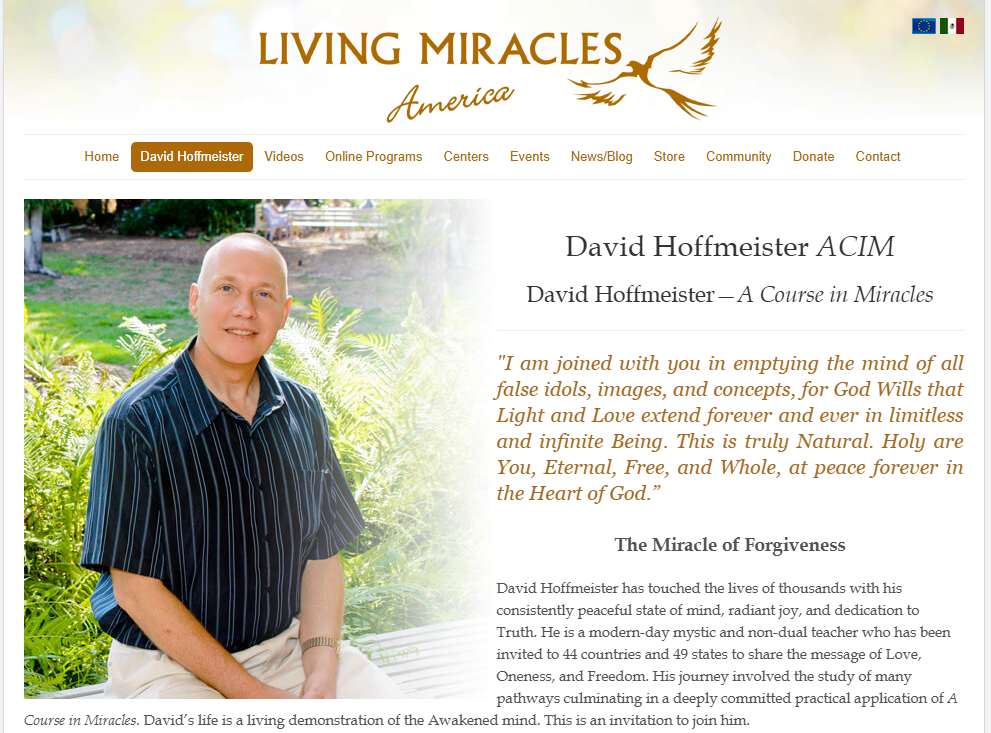
One of the most clear and direct messengers of this path is david hoffmeister, whose work emphasizes the practical application of these non-dual teachings. Through various global initiatives and community gatherings, he highlights how a life of total devotion to peace can lead to a state of constant joy and spontaneity.
Practical Steps for Daily Peace
For those looking to integrate these concepts into a busy schedule, several practical habits can facilitate the transition:
- Moment-to-Moment Awareness: Periodically checking in with oneself to see if the current thought is bringing peace or stress.
- Radical Forgiveness: Letting go of the “need” to hold onto grievances, recognizing that they only weigh down the person holding them.
- Trusting the Flow: Reducing the urge to micro-manage every aspect of life and allowing a higher sense of intuition to guide decisions.
Exploring the various david hoffmeister resources available can provide further insight into how these habits can be sustained over time. These teachings serve as a reminder that we are not victims of the world we see, but rather the authors of our own internal experience.
A New Way of Living
Ultimately, the goal of this spiritual path is to live with a sense of purpose that transcends individual ambition. When we prioritize the extension of love and kindness, our own experience of life becomes lighter and more meaningful. This shift in focus creates a ripple effect, positively impacting everyone we encounter and proving that a quiet mind is the most powerful tool we possess.
