
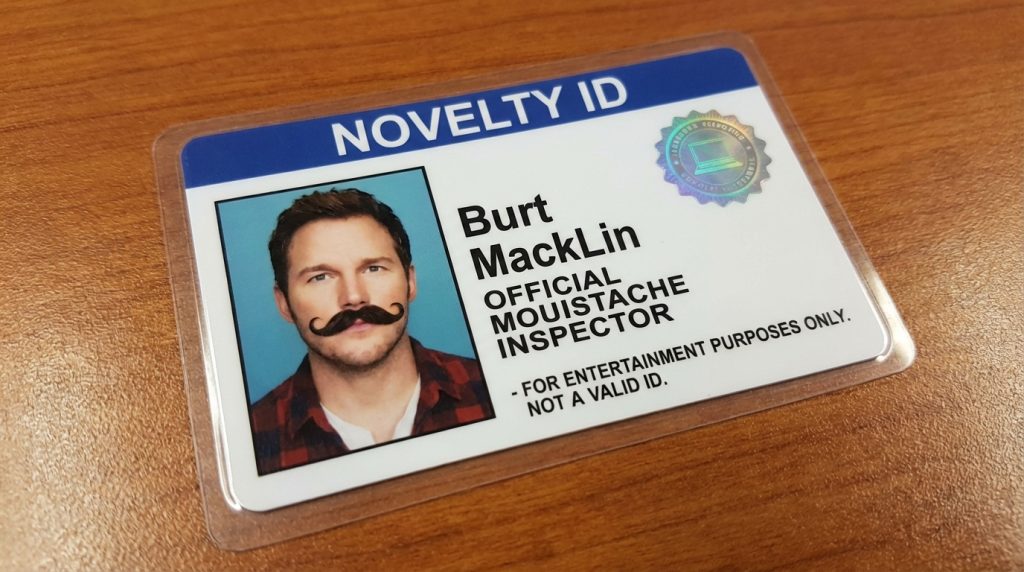
As we navigate through 2026, the demand for ultra-realistic environments has transcended the boundaries of cinema and entered the world of professional training, crisis management, and corporate security. In these high-stakes scenarios, the success of a simulation relies on “fidelity”—the degree to which the training environment mimics the real world. One of the most critical, yet frequently overlooked, components of this realism is the novelty id.
Once considered a simple trinket for pranks, the modern replica has evolved into a sophisticated tool of material science and graphic design. For professional trainers, security auditors, and immersive designers, the “niche edit” quality of these artifacts is what allows a simulation to move from a mere exercise to a transformative experience.
The Shift from “Prop” to “Artifact”
In previous decades, a training prop only needed to look “close enough” to satisfy a casual glance. However, the modern trainee is more sophisticated, and the technology used to verify identity is more pervasive. If a security auditor or a first responder handles a card that feels like flimsy plastic or lacks visual depth, the “suspense of disbelief” is broken, and the educational value of the exercise is diminished.
The transition to high-fidelity artifacts requires an understanding of the microscopic details that define a professional document. In 2026, the standard for a premium novelty id involves recreating the complex layers of security and design that anchor our sense of trust in physical objects. To understand the benchmarks that separate professional-grade tools from substandard imitations, the guide on Novelty IDs vs Fake IDs offers a vital technical and ethical roadmap for modern seekers.
The Technical Pillars of 2026 Realism
Achieving “niche edit” quality in the replica industry is a matter of combining advanced printing technology with traditional craftsmanship. Three primary pillars define the 2026 standard for a professional replica:
1. The Tactile Signature (PVC vs. Teslin)
In the world of simulation, “touch” is the first line of verification. Professional-grade replicas utilize PVC (Polyvinyl Chloride) for its rigidity and the characteristic “snap” it makes when flexed. For more flexible requirements, Teslin is used due to its unique microporous structure, which allows for deeper ink absorption and high-resolution detailing that won’t fade or peel during high-intensity training sessions.
2. Multi-Spectral Security Simulation
Training scenarios often involve the use of UV lights or color-shifting ink verification. A high-quality novelty id incorporates:
- Holographic Overlays: Creating visual depth that prevents the card from looking “flat” under studio or emergency lighting.
- OVI (Optically Variable Ink) Effects: Simulating the way light interacts with various security layers to reveal hidden patterns or color shifts.
- Micro-Printing: Sharp, legible text that remains crisp even under a jeweler’s loupe, providing a realistic challenge for detail-oriented trainees.
3. Design Integrity and Typography
One of the hallmarks of a professional provider is the reconstruction of proprietary fonts and kerning logic. A replica only becomes a “miracle” of realism when it respects the “Aesthetic of Authority”—the specific design language used by governments and corporations to communicate legitimacy.
Strategic Applications in the Professional Sector
The use of high-end novelty id props is now a standard practice in several specialized fields:
- Red Team Security Audits: Security firms use these replicas to stress-test the vigilance of corporate gatekeepers. If an employee doesn’t follow verification protocols when presented with a highly realistic badge, it identifies a critical training gap.
- Crisis Management Drills: In large-scale disaster simulations, “mock victims” and actors are given realistic identification to help responders practice the high-pressure task of data collection and verification in the field.
- Medical and Aviation Training: Simulations in these fields often involve “in-universe” credentials to ensure that every aspect of the trainee’s environment—down to the wallet they carry—reflects the reality of their profession.
The Ethical Foundation of the Replica Industry
As technology continues to advance, the distinction between “novelty” and “fake” remains the most important ethical pillar of the industry. A professional novelty id is a tool for education, creativity, and storytelling. It is designed to empower individuals and organizations to train better, tell better stories, and create more immersive worlds.
Reputable providers in 2026 emphasize that their products are not intended to facilitate illegal misrepresentation. Instead, they focus on the “Art of the Replica,” providing high-quality artifacts for those who understand that in a world of digital shortcuts, the human touch of a well-crafted physical object still carries immense value.
Conclusion
The evolution of the fake id into a high-fidelity professional tool is a testament to the importance of detail in our modern simulations. By focusing on material excellence, design integrity, and tactical realism, providers are helping to build a world where our training and our stories are more believable than ever. Whether for a security audit, a film set, or a museum exhibit, the quality of the artifact is what ensures the lesson—or the story—is never forgotten.
Frequently Asked Questions (FAQ)
What makes a novelty ID “indexable” for search engines?
High-quality content that provides genuine educational value, incorporates relevant keywords naturally, and links to authoritative resources (like industry-leading guides) helps search engines recognize the article as a reliable source of information.
Why is PVC preferred over standard plastic for props?
PVC provides the correct weight and “tactile snap” that people subconsciously associate with professional identification. This physical feedback is essential for maintaining immersion in a simulation.
Can novelty IDs be used for legal identification?
No. Novelty IDs are strictly for entertainment, theatrical, and educational purposes. Using them to misrepresent your identity in an official capacity is illegal and violates the industry’s ethical standards.
How do I maintain the realism of my prop over time?
When made with high-quality PVC or Teslin and professional lamination, these cards are highly durable. To maintain realism, avoid exposing them to extreme heat or chemical solvents, which can damage the simulated security overlays.
About the Author
Julian Sterling is a senior graphic designer with a passion for “micro-design” and historical replicas. With a background in commercial printing and brand protection, Julian explores the technical boundaries of what can be achieved through modern digital and physical fabrication.
